Why Does My Husband Get Angry Over Small Things?
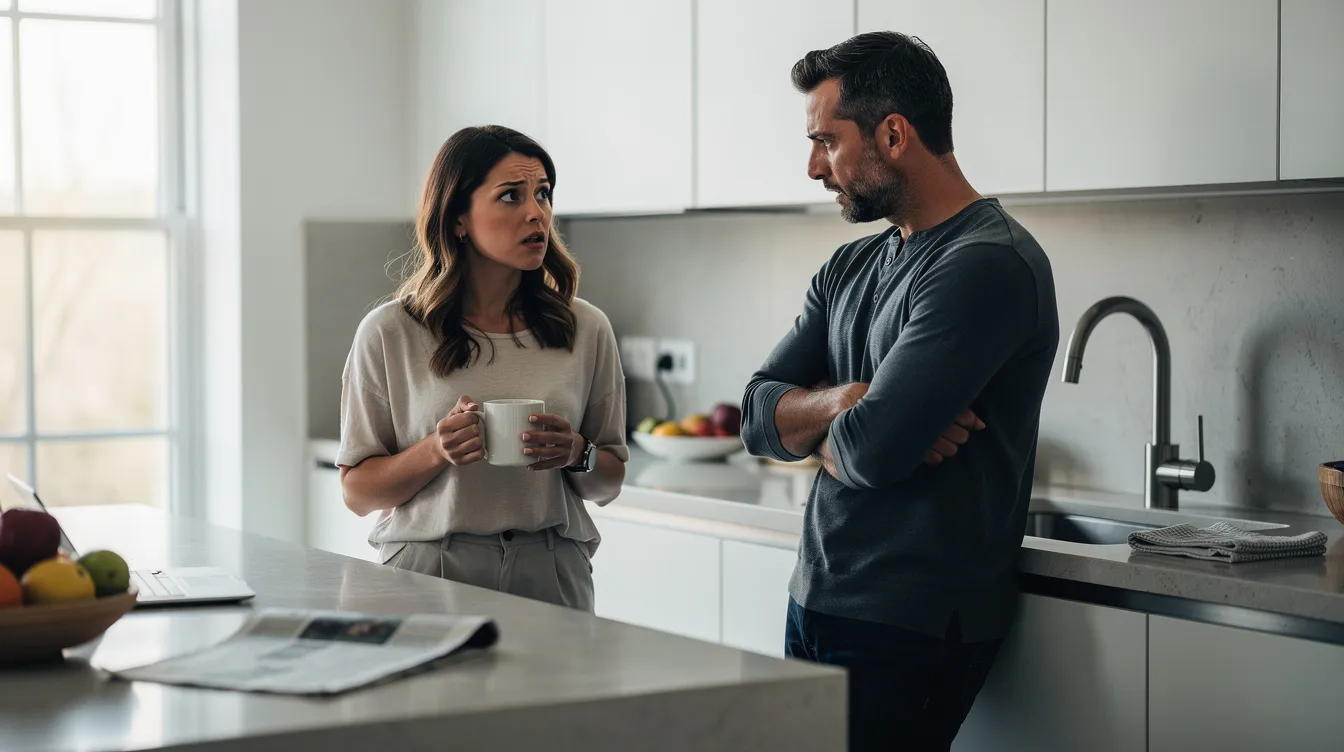
You’ve been together long enough to finish each other’s sentences. Long enough to handle co-op boards, holiday travel, and whose turn it is to call the plumber. But lately, something has shifted. Your husband gets angry over small things, the kind of things that used to roll off both of you without a second thought. A dish left in the sink. An unanswered text. The wrong brand of oat milk.
And you’re standing there, coffee in hand, wondering: when did we become this couple?
Anger in a relationship rarely arrives as one dramatic event. It seeps in through the little things, the eye rolls, the sighs, the clipped responses that accumulate like unpaid parking tickets until one morning, the whole thing blows. If your husband gets angry over little things with increasing frequency, what you’re witnessing isn’t a character flaw. It’s a signal. Something underneath the surface needs attention, and the anger is the only language it knows.
Key Takeaways
You might recognize a version of this: it’s a Tuesday. He walks in after a long day, sets his bag down, and sees a package on the counter that you haven’t opened yet. “Why is this still sitting here?” His voice has an edge. Your stomach tightens. You want to say, “It arrived twenty minutes ago,” but you’ve learned that explaining only makes it worse. He moves to the kitchen, opens the fridge, and sighs at nothing in particular. The whole apartment shifts. Dinner happens in near silence. Later, he seems fine, scrolling his phone on the couch like nothing happened. You’re still replaying it in your head, wondering what you did wrong. The answer, most likely, is nothing. But that episode, and all the episodes like it, are doing damage you can both feel even when neither of you talks about it.
- When a husband gets angry over little things repeatedly, the real issue is almost never the thing he’s upset about. It points to unmet needs, accumulated pressure, or unresolved feelings from the past that have nowhere to go.
- Anger functions like an iceberg: what you see on the surface, the outburst over a misplaced remote, covers deeper feelings like loneliness, shame, or hurt that he may not have the words to express.
- Gottman research shows that couples who respond to each other’s bids with curiosity rather than defensiveness are far more likely to stay together. Anger issues in a marriage often reflect missed bids that have compounded over months or years.
- Professional help from a therapist trained in evidence-based methods can interrupt destructive anger cycles before they erode the emotional safety both of you deserve in your relationship.
What Does It Mean When Your Husband Gets Angry Over Small Things?
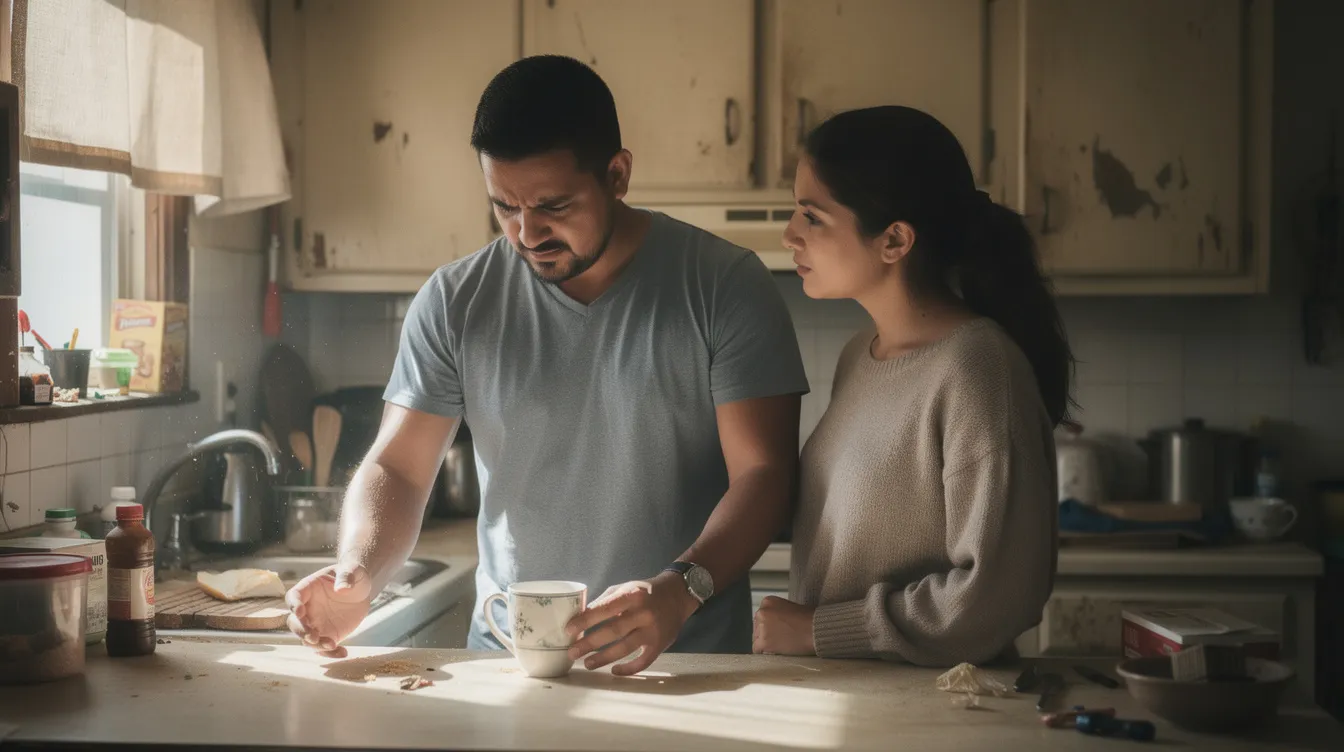
His anger at the GPS rerouting, the children leaving shoes by the door, the way you loaded the dishwasher: none of it tracks. The reaction doesn’t match the trigger. You know that. He might know that too, somewhere beneath the frustration. But knowing it and being able to change it are different things entirely.
When your husband gets angry about little things on a recurring basis, you’re watching a pattern, not a series of isolated incidents. The Gottman Institute’s decades of research on thousands of couples reveals that anger in a relationship often signals something far more significant: disconnection. A person can tolerate a surprising amount of daily friction when they feel close to their spouse. Without that connection, even small annoyances become unbearable.
Think of it this way. John and Julie Gottman describe a healthy relationship as “not one big thing, but a million tiny things every day for a lifetime.” Those tiny things include what researchers call bids for connection, instances where one partner reaches out and the other either turns toward, turns away, or turns against. When bids get missed repeatedly, hurt feelings don’t disappear. They accumulate. Anger becomes the pressure valve.

Why Does Your Husband Get Angry About Little Things That Shouldn’t Matter?
The answer to this question is never as simple as “he has a temper.” Several forces can drive disproportionate anger, and they tend to overlap in ways that make the whole thing harder to untangle on your own.
He’s Carrying Stress He Hasn’t Learned to Talk About
Your husband’s anger may have nothing to do with you or the relationship at all. Ongoing stress from his job, financial concern, or health worries can lower his bandwidth until there’s nothing left to absorb the normal bumps of daily life. For many men, especially high-performing professionals in demanding careers, admitting to feeling overwhelmed feels like admitting to weakness. The emotions get swallowed. Then they leak out sideways as irritability, snapping over a forgotten errand, or an outsized reaction to traffic.
Accumulated pressure from daily demands can reduce his resilience. When your husband seems upset about something trivial, what you’re often seeing is the last straw on a pile he hasn’t told you about. He might not even realize the pile exists.
His Anger Issues Trace Back to How He Grew Up
Anger issues don’t emerge in a vacuum. Many adults carry forward patterns from the families they grew up in. If your husband watched his father deal with frustration through rage, or if feelings were something his family never discussed at all, he may have absorbed a limited playbook for handling difficult moments. Unresolved trauma from childhood, whether it involved an angry parent or an unstable home, leaves scars that get reactivated by present-day triggers.
Gottman’s research calls these “enduring vulnerabilities,” old wounds that preceded the relationship and still shape how your husband gets angry today. When he blows up because the dinner plans changed, the intensity may belong to a moment from decades ago when things felt out of control and nobody helped him make sense of it.
Something in Your Relationship Feels Unfinished
Resentment is anger with a history. When couples avoid talking about what bothers them, whether to keep the peace or because they don’t know how to bring it up, those unspoken feelings don’t dissolve, and resentment in marriage can quietly erode connection over time. They ferment. A lack of open communication in your marriage leads to frustrations piling up until the whole thing explodes over something minor, like who forgot to pick up the dry cleaning.
Your husband’s anger might be code for something he doesn’t know how to say directly: I feel unheard. I feel unappreciated. I’m failing and nobody notices. Emotional disconnection can prompt anger as a counterproductive attempt to grab attention when he feels lonely or ignored in his own marriage.
He Doesn’t Know What He’s Feeling, and Anger Is the Default
Men often haven’t been taught other modes of expressing emotions beyond anger. Sadness, vulnerability, deep fear, loneliness: these feelings get funneled through the only outlet that seems acceptable. Your husband may genuinely not recognize that what he’s experiencing is grief, or shame, or exhaustion. The anger iceberg concept illustrates this well. What’s visible on the surface, the raised voice over a parking spot, masks a submerged mass of emotions he may not have words for.
This isn’t an excuse. It’s a diagnostic clue. And it matters because without understanding the deeper emotions underneath, no amount of “calm down” will change the pattern.
What Happened Inside His Brain When He Gets Angry About Little Things?
Disproportionate anger can be linked to conditions affecting the brain’s alarm system: the amygdala. When a person like your husband perceives a threat, even something trivial, the amygdala fires before the rational brain has time to weigh in. Therapists call this flooding. Heart rate spikes. Adrenaline surges. The body enters a state where it cannot distinguish between a comment about the thermostat and a genuine danger.
For someone with a sensitized alarm system, whether from childhood experiences, chronic stress, anxiety, fear, or conditions like ADHD or Intermittent Explosive Disorder, the threshold for this reaction is lower. The feelings of being out of control come fast, and the rational mind loses its ability to weigh in. Little things that wouldn’t register for someone with a calm nervous system can trigger a full threat response. This doesn’t mean the anger is your fault. It means his nervous system is doing what it learned to do a long time ago.
Understanding this biological reality can shift how you interpret his behavior. None of that makes the outbursts acceptable. The biological lens does, however, clarify why logic and reason don’t work during an episode like that. You can’t reason with a nervous system that has happened upon full activation.
How Can You Tell If Your Husband Has an Anger Problem or Something Deeper?
Everybody has bad days. The question isn’t whether your husband ever loses his temper. It’s whether a concerning pattern has taken hold. Below is a comparison of what normal frustration looks like versus warning signs that anger issues have crossed into something more harmful.
| Normal Frustration | Red Flag for an Anger Problem |
|---|---|
| Gets irritated but calms down within minutes | Shows sudden rage wildly out of proportion to the situation |
| Apologizes and takes responsibility after the moment passes | Doesn’t show remorse or keeps blaming you for his reaction |
| Can talk about what happened once feelings settle | Refuses to discuss the episode or tells you to leave when you try |
| Respects your boundaries even when upset | Belittles you, calls you names, or damages property |
| Frustration stays specific to one issue | Anger spills into unrelated areas; everyone walks on eggshells |
| Maintains friendships and social connections | Loses out on relationships because others avoid him |
| Never uses physical intimidation | Attempts to hit, shove, or inflicts harm on himself |
| Shows patience in most settings | Isn’t patient with anyone, including children, coworkers, and strangers |
| Can hear feedback without escalating | Isolates you from friends and family when you express concern |
| If what you’re seeing falls consistently on the right side of this chart, what you’re dealing with goes beyond ordinary frustration. Uncontrolled anger that includes physical violence, property destruction, or attempts to isolate you from your support network is a red flag that demands immediate attention. You deserve to feel safe, and no explanation for his behavior changes that. |
When Should You Feel Concerned About His Anger Issues?
Trust your feelings here. If you feel uncomfortable bringing up certain topics because you’re worried about how he’ll react, that tells you something important. Notice whether your children have started tiptoeing around their father, because that matters too. When friends have pulled you aside to ask whether everything is okay at home, take that seriously.
Not every anger problem escalates to violence, but the harm done by blaming, belittling, and behavior designed to control is still harm. You deserve to feel respected and to know how to remain calm when your spouse says hurtful things. Your kids deserve to feel safe at home. And your husband deserves the chance to get help before the damage becomes irreversible.
A Note About Safety and Domestic Violence
If your husband has used violence, threats of harm, or coercive control, or if you do not feel safe at home, working together in therapy is not the right starting point. At Loving at Your Best, Travis does not treat couples together when there is ongoing domestic violence or abuse. In those situations, each partner should seek individual help first. If you are experiencing abuse, please connect with domestic violence resources and crisis services to create a safety plan. The National Domestic Violence Hotline (1-800-799-7233) is available around the clock.
How Do Family Dynamics Shape the Way a Husband Gets Angry?
Anger doesn’t exist in isolation. It ripples through every relationship in the household. Family dynamics play a powerful role in both the origin and the impact of a husband’s anger. If he grew up in a home where rage was the default, he may carry that template into his own life without recognizing it, especially when no one learned how to help each other feel seen, safe, soothed, and secure in marriage.
Children are especially sensitive to the climate of their home. Growing up in an environment where anger erupts unpredictably teaches them that the world isn’t safe, that they need to monitor other people’s moods to protect themselves. Research consistently shows that children who witness chronic conflict between their parents are more likely to struggle with anxiety, behavioral difficulties, and trouble forming healthy relationships later.
This is why addressing anger issues isn’t optional. It’s not about keeping score or winning arguments. The stakes are about emotional safety for every member of the household. When a husband’s anger goes unchecked, the cost extends beyond the couple. It shapes how children learn to love, how they manage their own feelings, and what they carry into their own partnerships years later.
What Does the Gottman Method Reveal About Anger in a Relationship?
Understanding the Gottman Method for couples therapy can clarify why certain anger patterns are so destructive and what specific skills help couples repair after conflict.
After observing thousands of couples in their Love Lab in Seattle, John and Julie Gottman identified specific patterns that distinguish what they call “master” couples from “disaster” couples. Masters stay together happily in their marriage. Disasters either split up or remain together in quiet misery. The difference isn’t whether these couples argue. Every couple argues. The difference is how they repair afterward, and whether they take responsibility or keep blaming each other for the feelings that surfaced during what happened.
Bids for Connection and What Has Happened When They’re Missed
A bid for connection can be as simple as your husband saying, “You won’t believe the call I had today,” or pointing out something funny on his phone. These bids are invitations for you to turn toward him. Gottman’s longitudinal research found that couples who stayed together turned toward each other’s bids 86% of the time. Couples who divorced? Only 33%.
When bids get consistently ignored or dismissed, the partner making them begins to feel invisible. That invisibility breeds emotional hurt, and hurt feelings, over time, often transform into anger. Your husband may not articulate that what he wants is connection. He may not recognize his own need beneath the irritability. What surfaces instead is frustration, blaming, and anger over things that objectively don’t matter.
The Four Horsemen and How Anger Feeds Them
The Gottmans identified four communication behaviors that predict relationship failure with startling accuracy. They call them the Four Horsemen of the Gottman Method: criticism, contempt, defensiveness, and stonewalling. When a husband’s anger goes unaddressed, it tends to fuel all four.
Criticism replaces gentle talk. Contempt creeps in through eye rolls and sarcasm. Defensiveness becomes a reflex when either partner feels attacked. Stonewalling, the act of shutting down and withdrawing, follows when the nervous system becomes too flooded to engage. Each horseman makes the next one more likely, creating a cycle that accelerates toward distance and despair, and persistent stonewalling in a relationship can be just as damaging as explosive anger over time.
Breaking this cycle requires more than willpower. It requires learning a new language for conflict, one built on what Gottman calls “soft startups,” active listening skills, and intentional repair. Anger management techniques have their place in this work, but the deeper change comes from understanding the feelings and fears that fuel the anger.
What Should You Do When Your Husband Gets Angry Over Small Things?
There’s no script that works for every couple. But there are principles grounded in decades of research that consistently help each partner deal with anger without making things worse.
How Do You Set Boundaries Without Making It Worse?
Learning to establish healthy boundaries in your marriage is one of the most effective ways to protect yourself while still leaving room for connection and repair.
You can set boundaries with firmness and warmth at the same time. Boundaries aren’t ultimatums or threats. They’re clear statements about what you will and won’t tolerate. “I want to hear what’s bothering you, but I’m not willing to be yelled at” is a boundary. “If you raise your voice, I’m going to step into the other room until we can talk calmly” is a boundary.
These statements protect your own well-being while leaving the door open for dialogue. When you set boundaries consistently, you’re communicating something important: this marriage matters enough to safeguard. You’re also modeling what healthy anger management looks like, for example, showing your kids that someone can be firm and loving at the same time.
When Should You Walk Away from a Heated Moment?
Walking away from a heated situation isn’t giving up. It’s preventing the kind of damage that happened the last time two flooded nervous systems tried to resolve something neither of you could think clearly about. Gottman’s research shows that once heart rate exceeds about 100 beats per minute, productive dialogue becomes physiologically impossible. The calm, rational brain goes offline.
If your husband is in the middle of an outburst, this is not the moment to explain why he’s wrong or to process your hurt feelings. Wait. Give it twenty minutes, maybe longer. Go for a walk. Let both nervous systems settle. Then, and only then, try to talk about what happened.
How Do You Talk About His Anger After He’s Calm?
Timing is everything. Once the heat has passed and both of you can listen to each other without defensiveness, you have a window. Use it. The Gottman method for processing what happened involves five steps: first, each of you talks about what you were feeling during the incident, not what the other did wrong. Then each of you shares your perspective. Next, both of you explore whether older triggers were activated. After that, each of you accepts responsibility for your part. The Gottman research found that taking responsibility, even for a small part of the problem, creates one of the most powerful openings for repair.
This isn’t a debate. Nobody wins. The goal is to understand what the argument looked like through your husband’s eyes. As Gottman puts it, “there’s no immaculate perception.” Both of your realities are valid, and being able to say, “From your point of view, it makes sense that you felt that way,” is one of the most powerful tools a couple can learn.
Write down your feelings beforehand if the discussion feels daunting. Having your thoughts organized can help you communicate without getting swept back into all the feelings of the original incident.
How Do You Protect Yourself When Your Husband Gets Angry Over Small Things?
Living with someone whose anger is unpredictable takes a toll that’s easy to underestimate. You may find yourself managing his moods before your own needs, editing your words to avoid setting him off, or feeling guilty for things that aren’t your fault.
Self care in this context isn’t a luxury or a buzzword. It’s a survival strategy. Lean on friends who know your situation. Maintain your own interests and identity outside the home. If you’ve stopped seeing the people you love because his anger makes it complicated, that pattern alone deserves attention.
Individual therapy gives you a space to process your own feelings without having to manage his reaction at the same time. It’s a place to hear yourself think, a place where blaming doesn’t happen and your feelings are taken seriously. A good therapist can also help when your partner seems distant or shut down, using approaches like schema therapy to address an emotionally unavailable partner. A good therapist can help you answer the questions you may be carrying quietly: Is this normal? Am I overreacting? What do I deserve?
You don’t need to feel guilty for taking care of yourself. Protecting your well-being isn’t a betrayal. It’s a prerequisite for a healthy relationship.
How Does His Anger Affect Your Children?
If you have children, they are absorbing more than you think. A screaming match isn’t required for kids to feel the tension. Even young children notice when you tense up as their father walks through the door. They pick up on the silence that follows an argument, and they learn, without anyone teaching them, that certain topics are off limits and certain moods must be managed.
This is where the stakes go from personal to generational. Children who grow up in households dominated by anger issues often develop their own difficulties with feelings, with anxiety, and with relationships, especially when a parent withdraws or shuts down and a partner feels ignored, much like when a husband ignores you in marriage. The patterns replicate. A father’s unaddressed anger becomes the template his son or daughter unconsciously carries into adulthood. It happened to him, and unless something changes, it can happen again.
Seeking help for anger issues in your household is one of the most protective things you can do. That decision breaks the cycle and gives your children a different model for what love can look like when two people are willing to do the hard part of repair.
When Is It Time to Seek Professional Help for Anger Issues?
If you’re reading this article, you’ve probably already crossed that threshold. The fact that you’re searching for answers, trying to understand what’s driving his behavior, tells you something. Trust that instinct.
There’s no need to wait for a crisis to seek professional help. Waiting until things are “bad enough” is one of the most common reasons couples delay getting support, and by the time they arrive, anger has already done years of damage. If his anger issues are leading to more fights, eroding trust, or making you feel emotionally unsafe, those are reasons enough.
Couples therapy with a trained therapist gives both of you a structured environment to talk about what’s happening without the conversation spiraling. Marriage and couples counseling in NYC can provide a focused space to work directly on anger, communication, and repair. A broader guide to couples therapy in NYC can also help you understand your options, from different therapy approaches to how to choose the right fit, so you can identify the patterns that keep you stuck, learn tools for repair, and create the safety both of you need to be honest about what’s not working.
Individual therapy can help your husband explore the roots of his anger issues, whether they trace back to childhood, to unresolved trauma, to anxiety, or to depression wearing the mask of irritability. Anger management is part of this work, but the most lasting change comes from understanding why the anger is there in the first place, what feelings it’s covering, and what happened in his history that made anger feel like the only option.
The first step is often the hardest. But the first step toward something better always feels that way.
Ready to Stop Walking on Eggshells?
If your husband’s anger over little things has become the climate of your home, you don’t have to keep managing this alone. At Loving at Your Best, Travis Atkinson works with professional Manhattan and Brooklyn couples who look “fine” from the outside but are exhausted by cycles of anger and distance. Online therapy for couples gives both of you a structured, judgment-free place to talk about what’s happening and what needs to change, and the secure Travis Client Portal makes scheduling and managing sessions straightforward once you decide to begin.
Remember that Tuesday evening vignette from earlier in this article? Couples who begin this work often describe a shift within the first six to eight sessions. The arguments don’t vanish, but they lose their sharp edges. Recovery after conflict gets faster. Both partners start to feel less like enemies and more like teammates again. You leave each session with specific tools to use between meetings, not only insights but practices that change how you talk and how you listen during the moments that matter most.
Schedule an online consultation with Travis Atkinson to find out whether this approach fits your relationship. One conversation can be the moment the pattern starts to change.
Frequently Asked Questions
How do we know if online couples therapy is right for us?
If anger has become a recurring theme and your attempts to talk through it keep ending the same way, that pattern is unlikely to shift without outside support. Online therapy for couples in New York works well for busy professionals because it removes logistical barriers. There’s no need to commute across Manhattan after a long day at your job. Instead, you log on from wherever you are, and you address what counts.
What makes working with a therapist different from talking things through on our own?
A trained therapist sees the patterns you’re living inside and can’t always see for yourselves. For example, discussions between spouses tend to follow familiar grooves, the same arguments, the same defensive moves, the same dead ends. Therapy introduces a different structure and teaches both of you how to listen and how to respond in ways that build trust rather than erode it.
What if one of us is more hesitant than the other?
This is one of the most common situations. One of you recognizes the anger problem and wants to address it; the other isn’t sure therapy will help or worries about being blamed. A good therapist doesn’t take sides. The goal is to understand both perspectives, not to place blame. Often the hesitant one becomes the most engaged once they realize they’ll be heard, not judged.
Is this appropriate for high-functioning, professional couples?
High-functioning couples are often the ones who wait the longest to seek professional help, because from the outside, everything looks fine. Successful careers, nice apartment, full social calendar. Inside, though, they may feel disconnected, frustrated, or trapped in a cycle where anger has become the loudest voice in the room. Travis Atkinson works specifically with these couples and understands the particular pressures of professional life in New York.
How does online therapy work for demanding Manhattan and Brooklyn schedules?
Sessions happen over secure video. A limited number of daytime slots are available, and evening appointments are even more limited, so most couples schedule as soon as they decide to begin. There’s no commute, no waiting room, and no need to explain to coworkers why you’re stepping out. For couples managing packed calendars, this flexibility is often what makes therapy possible in the first place.
What happens in the first few sessions?
The initial sessions center on understanding your history, identifying the patterns that lead to conflict, and building enough safety for both of you to be honest about what’s happening. Travis uses an integrative approach that combines Gottman Method pattern clarity with Schema Therapy’s depth on long-standing anger modes and Emotionally Focused Therapy’s focus on the bond underneath the explosions. Exploring top rated couples therapists in NYC can further highlight how expert relationship counseling helps you not just “calm down,” but change what triggers the anger in the first place and rebuild the connection that got buried beneath it.
Do you take sides?
No. Both of you need to feel safe enough to be honest, and that requires knowing the therapist isn’t keeping score. Instead of determining who’s wrong, the goal is to help you understand each other’s experience and feelings.
How do we get started with Travis Atkinson?
You can visit the Loving at Your Best website to schedule online couples therapy with Travis Atkinson. The process begins with talking about what’s happening in your relationship and whether Manhattan and Brooklyn couples counseling might be a good fit. There are no obligations and no pressure, only an open door.
What Are the Deeper Triggers Behind Your Husband’s Anger?
Most men were never handed an emotional vocabulary. They were handed a limited set of acceptable outlets: anger, and maybe lust. Sadness? Weakness. Fear? Cowardice. Loneliness? Not something you mention at the office. When the full range of human feeling gets compressed into one or two channels, it becomes the spokesperson for everything: grief, shame, exhaustion, helplessness. Your husband may not be choosing anger. He may not know any other language for what he’s carrying.
Underneath many of these outbursts lies something called an emotional flashback. Unlike a visual flashback, where someone replays an image from the past, an emotional flashback is subtler and harder to identify. A minor slight, a tone of voice, a feeling of being dismissed, can activate old wounds so quickly that your husband responds as though a past threat is happening right now. He isn’t reacting to the dishes. He’s reacting to a version of helplessness or rejection he felt at eight years old, or fifteen, or in a previous relationship where his feelings were ignored. The present trigger and the past wound merge, and the intensity of the reaction reflects both at once.
This is why “just calm down” never works. The nervous system doesn’t distinguish between old danger and new inconvenience once a flashback has been activated. Addressing these triggers requires the kind of work that goes beneath surface-level anger management, into the attachment injuries and unresolved stories that give anger its outsized power. In therapy, this is where Schema Therapy and Emotionally Focused Therapy become particularly useful: they help both partners understand what’s being triggered and why, so those old reactions stop hijacking every exchange.
What Are the Warning Signs That Your Husband’s Anger Issues Have Become Dangerous?
There’s a difference between a husband who raises his voice during a frustrating exchange and one whose behavior has crossed into territory that puts you or your family at risk. Recognizing that line is critical, because the earlier you see it, the more options you have.
Warning signs that the pattern has moved beyond frustration into something more harmful include: he attempts to hit you, even if he stops short or claims he was “only trying to scare you.” He shouts at you regularly and doesn’t show remorse afterward. When you disagree, he tells you to leave, shutting down your voice as a way to maintain control. Your friends and family become harder to reach because he isolates you from those who might offer outside perspective. Rather than accepting responsibility, he justifies everything he does wrong. Physical abuse or self-harm during episodes of rage may also be present.
None of these behaviors are a “bad day.” They form a pattern of control and harm that requires a different kind of intervention than joint therapy. If you recognize these signs in your husband, your safety and the safety of your children come first. Individual support, crisis resources, and a safety plan are the priority. The National Domestic Violence Hotline (1-800-799-7233) can help you figure out your next steps confidentially.
How Do You Cope with Living with a Husband Who Gets Angry Easily?
Surviving each outburst is not the same as coping well. Plenty of spouses become experts at reading the room, adjusting their tone, timing their requests, and quietly absorbing the blowups to keep things calm on the surface. That’s not coping; it’s hypervigilance, and it takes a toll on your body, your mood, and your sense of self over time.
Genuine coping starts with safeguarding your well-being, not managing his. Walking away from a heated situation isn’t abandonment or failure; it’s a decision to prevent damage that’s hard to undo once it happens, especially if your husband goes crazy when you disagree with him. Leaving the room, taking a drive, going for a walk: these aren’t dramatic gestures. They’re practical tools that preserve your emotional safety and give both nervous systems the space to calm down.
Taking time for self care is another piece that often gets pushed to the bottom of the list when you’re living in an unpredictable household. But self care, in this context, isn’t bubble baths and affirmations. Keeping your friendships alive so you’re not isolated is part of it. Talking to someone you trust about what’s happening at home is another. Staying connected to activities and interests that remind you who you are outside of this cycle. All of these choices reduce stress, improve your capacity to regulate how you’re feeling, and keep you anchored when his mood tries to pull you into its orbit.
How Can You Talk to Your Husband About His Anger Without Making It Worse?
Timing changes everything. Bringing up the topic while he’s still activated is like trying to have a calm discussion in the middle of a fire alarm. The brain’s threat-response system has taken over, and nothing productive can happen until it settles. Taking time to cool down before having that discussion is not avoidance. It’s the single most effective thing you can do to make the discussion productive instead of another fight.
Once both of you have settled, and that may take twenty minutes or it may take a few hours, you can try a different kind of approach. Gottman’s research calls this a “soft startup”: leading with what you’ve been feeling and what you need rather than with blame. “I’ve been feeling distant from you, and I want to understand what’s going on” lands differently than “You always blow up over nothing.” One opens a door. The other slams it.
During that discussion, the goal isn’t to fix everything in one sitting. It’s to receive each other. Let him talk about what he was feeling, not what you did wrong. Share what you were feeling without blaming him for it. If old triggers came up for either of you, name them. The Gottman repair process, especially when guided by a Gottman certified couples therapist, where each of you takes responsibility for even a small part of what happened, has been shown in research to be one of the most effective tools for preventing the same argument from repeating. Agreement on who was right isn’t the point. What helps is understanding what it looked like through each other’s eyes.
About the Author
Meet Travis Atkinson, a leader in couples therapy. He is the founder of Loving at Your Best Marriage and Couples Counseling, serving couples in Manhattan and Brooklyn through online therapy. A Certified Gottman Method Couples Therapist since 2006, Travis integrates Gottman Method, Schema Therapy, Emotionally Focused Therapy (EFT), and attachment-based approaches to help high-functioning couples rebuild connection and break destructive patterns. With nearly three decades of clinical experience, he specializes in working with professional couples who are dealing with anger, distance, infidelity, and the particular pressures of life in New York City.
If you’re ready for those little things to stop running your marriage, schedule an online consultation with Travis Atkinson at Loving at Your Best. One conversation can shift what happens next.
The little things that keep sparking anger? They’re asking you to pay attention. Not to the dishes, or the oat milk, or the GPS. To each other. That’s where the answer has been the whole time.
Ready to Transform Your Relationship?
Travis Atkinson, LCSW, specializes in evidence-based couples therapy including the Gottman Method, EFT, and Schema Therapy, for couples in NYC and online. Take the first step today.