The dishwasher argument ended twenty minutes ago. You are still standing in the kitchen trying to name what it was about. Whatever you two were fighting over wasn’t the dishwasher. If couples counseling in Brooklyn is something you have been circling, Loving at Your Best Marriage and Couples Counseling offers online couples therapy for high-functioning partners across Brooklyn, NY, and throughout New York State, built on three research-backed modalities: the Gottman Method, Emotionally Focused Therapy, and Schema Therapy for Couples. I am Travis Atkinson, LCSW, LICSW, and I have spent three decades learning why capable people argue about everything except the thing that hurts.
That question, what the argument is under the argument, is the one this page answers. It is also the question your first sessions with me are built around.

Book Your First Couples Session

Because most couples never think to check. Family therapy researcher William Doherty has estimated that roughly 80% of therapists who see couples have no formal training in a couples modality. Anyone licensed for individual work can advertise couples therapy in Brooklyn without a single hour of couples-specific instruction. Most therapists are candid about this when asked. Few couples think to ask. Couples counseling in Brooklyn, NY spans hundreds of therapists. Consulting a qualified couples therapist means checking their licensing and their specialized training. That single step separates therapy that reaches the pattern from therapy that circles it.
Every item below is verifiable:
Credentials do not heal a marriage. They tell you whether the person guiding you has walked this terrain enough times to know where it drops off. Many partners who seek couples therapy after a failed earlier attempt discover, too late, that their previous counselor had no formal couples training at all.
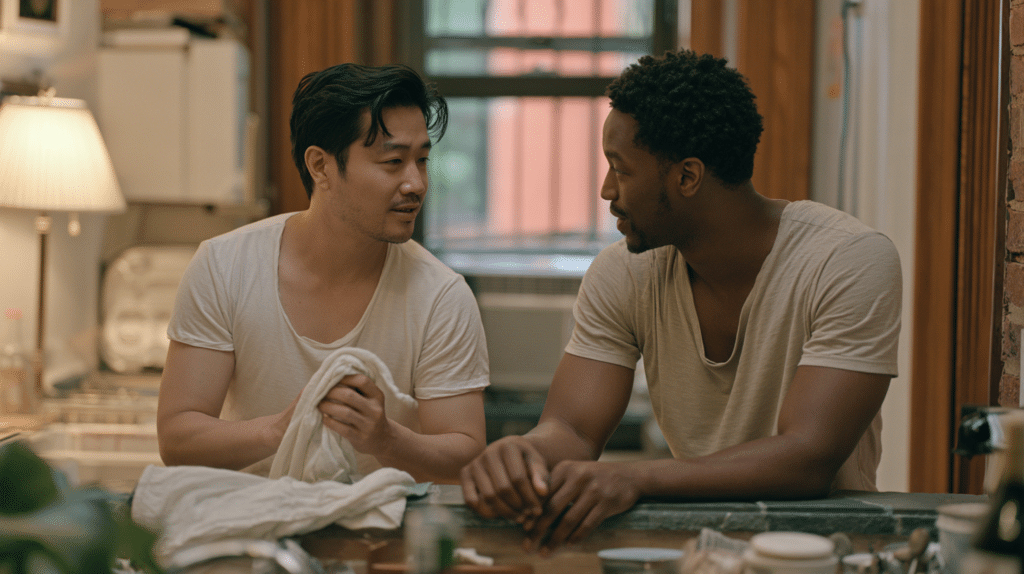
High-functioning couples face emotional disconnection and recurring conflicts that never reach crisis level, which is the trap: life looks successful from the outside while intimacy erodes inside the relationship, so nobody sounds the alarm. Couples therapy at Loving at Your Best is designed for partners in Brooklyn, NY who lead teams, close deals, raise children, and still cannot get through a weeknight dinner without the temperature dropping, and it draws on the same marriage and couples counseling in NYC framework offered to partners across the city.
Relationship issues at this altitude rarely announce themselves as a crisis. The relationship challenges that finally bring partners in are quiet ones: a shared life that runs like a well-managed project, warmth that shows up mostly in photographs, sex that has become a scheduling question. Therapists see the loud version of distress arrive quickly. This quieter version waits the longest. High-functioning partners bring unique challenges to a couples therapist, and chief among them is this: the same way you both solve problems at work becomes the way you avoid feelings at home.
You know the scene. One of you asks a question with an edge hidden in it. The other hears the edge, not the question, and answers the phone instead. Ten minutes later, the apartment is quiet in the specific way that is louder than shouting. Neither of you is unskilled at communication. You both run meetings for a living. Something else is happening, and the challenges underneath do not respond to competence.
Screenwriters understand this better than most relationship advice does. In every scene of a great film, characters say one thing while fearing two others: that they will be rejected. That they will be trapped with someone who never sees them. Distressed partners live inside that exact subtext. The pursuing partner protests disconnection; the withdrawing partner protects against failure. Each move calls forth the next, and the loop runs on the most powerful emotions humans have. Therapy helps couples identify the emotional patterns beneath conflict, because the words being exchanged were never the message.
A line I offer many couples in a first session: the argument you keep having is the one neither of you has ever said out loud.

Loving at Your Best integrates three evidence-based frameworks into couples counseling because relationship distress operates on three levels at once: what you do, what you feel, and what you learned before you ever met. One modality can improve communication; the integration is what makes change hold. Each framework carries something the others cannot supply on their own.
The Gottman Method is a data-driven approach, sometimes called the engineering approach to relationships, built on more than 40 years of observational research at the Gottman Institute. In couples therapy sessions, you get proven techniques you can feel working within weeks: a gentle start-up instead of criticism, repair attempts during escalation, and structured ways to build fondness when contempt has been doing the talking, including Gottman Method active listening skills that help partners stay engaged instead of shutting down.
The research identified four interaction patterns, the Four Horsemen of the Gottman Method, that corrode a relationship from within: criticism, contempt, defensiveness, and stonewalling. It also found that roughly 69% of ongoing conflicts are perpetual, meaning the goal is not to resolve conflicts out of existence but to change how you hold them. The Gottman Method focuses on communication and conflict resolution through structured skills. It enhances emotional connection through practices couples repeat between sessions until they become reflex. For partners juggling dual careers, parenting, or co-parenting across two households, these tools fit inside real daily life, especially when grounded in a Gottman Method for couples therapy approach tailored to your relationship.
Structured sessions that target the mechanics of communication improve communication quickly. That early traction matters, particularly for couples struggling with communication problems using the Gottman Method. What the behavioral layer cannot do alone is explain why a grown adult with excellent communication skills goes silent mid-conversation. For that, the work goes deeper.
Emotionally Focused Therapy, developed by Dr. Sue Johnson, treats relationship distress as an attachment emergency rather than a skill deficit. When a safe connection feels lost, partners drop into fight-or-flight: one blames and pursues to get any response at all. The other freezes and withdraws to stop failing. Both are terrified. They are handling it differently, and each strategy confirms the other’s worst fear.
EFT names this loop, most often the pursuer and withdrawer cycle, and then does something counterintuitive: it slows the fight down until the softer feelings underneath become audible. Beneath the anger is a question as old as infancy: do I matter to you, and will you come when I call? Emotionally focused therapy transforms negative interaction patterns by helping partners answer that question directly, in session, to each other’s face.
According to research summaries published by ICEEFT, roughly 70-75% of couples move from distress to recovery in EFT, and around 90% show significant improvement, with gains holding at follow-up. Those figures include couples working through infidelity. Numbers aside, what I watch for in the room is quieter: the moment a withdrawing partner turns back toward the person they had stopped reaching for.
Because the reflexes that hijack your worst moments were built long before you met. Schema Therapy for Couples, which I co-developed with Dr. Jeffrey Young after beginning training with him in 1994, maps how each partner’s early maladaptive schemas lock into the other’s, a fit Dr. Young and I came to call schema chemistry. The chemistry that drew you together and the chemistry that now combusts on Sunday nights are often the same chemistry.
In session, the old patterns show up as modes. The Vulnerable Child feels abandoned or unseen. An Angry Child lashes out from decades of unmet needs. A Detached Protector numbs, scrolls, goes flat, and leaves the room without leaving the couch. Partners who stonewall are not choosing rudeness. A protective mode shaped by past experiences is running the show, usually one that once kept a child safe in a family where needs were a burden. Through chair work, imagery rescripting, and empathic confrontation, both partners build a Healthy Adult mode that can catch the trigger before it becomes a rupture.
This is the layer where the argument under the argument finally gets a name. Once it does, the dishwasher goes back to being a dishwasher.

Every session at Loving at Your Best happens over secure, HIPAA-compliant video. There is no Brooklyn office and no in-person option, by design. Online couples therapy is effective for relationship distress: a systematic review of videoconferencing therapy with couples and families found outcomes comparable to in-person treatment on relationship satisfaction and mental health measures. The approach reflects the training and experience described in Meet Travis Atkinson: A Leader in Couples Therapy. What the research measures as equivalence, my clients describe as relief. No waiting room encounters; no crosstown commute eaten out of a workday. And the strange advantage of doing vulnerable work from your home, on your own couch, where the patterns live anyway.
Licensing and location. You and your partner must be physically located in New York, Florida, or Vermont during sessions. The practice holds active licensure in all three states, and teletherapy law requires that alignment.
Assessment and structure. Initial sessions include a thorough assessment of your relationship history, relevant family history, and goals. I use validated instruments, including the Gottman Relationship Checkup, alongside schema and attachment-focused evaluation, to map your current challenges and what has been keeping the cycle alive. Goal-setting then anchors each phase, keeping progress visible rather than vague. Achievement-oriented minds tend to exhale at this point. Structure replaces the drifting “how was your week” sessions many couples describe from previous therapy options.
Cadence. Regular therapy sessions run 50 to 60 minutes, weekly or biweekly. This is not short-term therapy, and I would rather say so at the start than let the timeline catch you by surprise later. Patterns that took years to groove in do not release on a fixed schedule, so I do not quote a session count. Most couples do notice early movement in how a fight starts and how quickly it recovers. Changing what keeps the cycle alive underneath is slower work, and entrenched schema activation, trauma, or infidelity recovery extends it further. We set goals at the outset and revisit them as we go, so the length of the work stays a conversation rather than a guess.
Fees and out-of-network benefits. Pricing for couples therapy in Brooklyn varies widely, and some therapists offer sliding scale fees; I operate as an out-of-network provider serving partners whose insurance reimburses out-of-network care. After each session, you receive a superbill with CPT codes, my NPI, and licensure details to submit for reimbursement. Your plan’s member services line can confirm your rate.

Recognition, mostly. Most couples arrive braced for a referee, only to meet a couples therapist holding a map. Within the first sessions, the fight you have been having for years is drawn out in front of you as a cycle with steps, triggers, and a history. Partners routinely say some version of the same sentence: “We thought we were the only ones,” a realization that mirrors what many describe when starting with top rated couples therapists in NYC.
A composite from my practice: two professionals, both carrying brutal calendars, tell me they cannot talk without it turning into a fight. The Gottman assessment reveals a clear pattern: criticism answered by stonewalling. EFT work reveals that the criticizing partner floods because reaching out feels dangerous. Beneath the sharpness lies a bid for connection that has been rejected too many times to risk being plain about it. Schema work then locates the origin: an Emotional Deprivation schema in the pursuer, formed in a family where no one asked how she felt, and a Defectiveness schema in the withdrawer, formed under a father who could never be satisfied by achievement. Neither partner is the problem. The relationship structure between them, assembled from each one’s life experience, is where the intervention lands.
Notice what changed in that paragraph. The fight stopped being evidence about character and became information about history. That shift, from blame to pattern, is the hinge of the entire healing process, and it usually arrives earlier than couples expect. What takes longer is trusting it enough to stay soft mid-argument. That is what the remaining sessions train.
Outcome reviews frequently cited in the field report that over 80% of couples find marriage counseling effective and that couples therapy reduces relationship distress in roughly 80% of cases when clinicians deliver evidence-based methods with fidelity. The same literature shows a sobering counterpart: in everyday practice, where couples-specific training varies widely, clinically significant change occurs in fewer than 40% of couples, and dropout rates approach 50%. That gap between the two sets of numbers is not a mystery. It is a training gap, and it is the reason the first section of this page exists.

Yes, and the sequencing matters more than almost anything else in couples counseling. An affair is not one wound. It is a demolition of the assumptions a relationship stood on, and rebuilding follows an order. Surface apologies collapse because the betrayed partner’s alarm system stays armed: a Mistrust schema keeps firing, sometimes pulling in a punishing internal voice that turns every quiet evening into a cross-examination neither partner chose.
The work combines Gottman trust-rebuilding protocols, which give behavioral accountability a concrete form, with EFT attachment repair, in which the injury is spoken of and addressed rather than managed, alongside a modern infidelity guide to understanding betrayal and rebuilding trust that reflects how affairs look in a digital age. Schema mode work addresses what the affair activated underneath: shame, hypervigilance, and, for many betrayed partners, a resurrected childhood conviction that they were never going to be enough. For discreet professionals in Brooklyn, NY, the privacy of online sessions also removes one more obstacle to starting this work while it can still shape the future rather than merely explain the past.
ICEEFT-affiliated research indicates that most couples who complete EFT-based infidelity work show substantial recovery, and Gottman methods have a specific application for rebuilding intimacy after betrayal. Couples therapy can improve trust after infidelity when both layers are addressed: the visible behavior and the wound beneath it. Recovery opens with a comparable arc, and navigating the emotional disconnection after infidelity is slower than either partner wants and faster than either partner fears.
Healing here is not the absence of the affair in memory. It is the presence of a stronger foundation than the one the affair broke.

By treating the transition as a stress test that reveals the pattern, not as the pattern itself. Life transitions, a new baby, a career leap, a move, retirement, or an illness do not create your cycle. They turn its volume up. A couples therapist trained across modalities can hold both layers at once: the logistics of the transition and the attachment question vibrating under it.
Co-parenting work, whether inside an intact marriage, a blended family, or after separation, gets the same dual attention. So do the challenges of dual careers, the arrival of a new baby and the postpartum depression that can shadow it, the negotiation of open relationships, the disruption of a physical illness. The identity shifts of parenting itself, each one a renovation of the life you built together. Each a season where many partners seek couples therapy in NYC to renew their relationship. Counseling assists with major life transitions like marriage or a first child precisely because those thresholds reactivate every family-of-origin lesson about what closeness costs. Partners in these seasons often need fewer communication skills and more mutual understanding of why this particular threshold feels like this particular threat.

Everywhere a stable internet connection reaches, which makes geography a scheduling detail rather than a barrier. Partners searching for therapy in Brooklyn often assume an office visit; Loving at Your Best provides virtual therapy instead, serving couples across Brooklyn, NY, throughout New York City, and well beyond.
Brooklyn neighborhoods served: Park Slope, Williamsburg, DUMBO, Brooklyn Heights, Cobble Hill, Carroll Gardens, Fort Greene, Clinton Hill, Prospect Heights, Bay Ridge, Bushwick, Greenpoint, Red Hook, Flatbush, Crown Heights, and Bed-Stuy.
Greater New York City: Manhattan, Queens, the Bronx, and Staten Island.
Beyond the boroughs: Westchester, Long Island, the Hudson Valley, and all of New York State.
Additional states: Florida and Vermont, where the practice holds active licensure.
Loving at Your Best provides LGBTQIA+ affirming couples counseling, including work with same-sex couples, across the full range of relationship structures. Many Brooklyn therapists offer LGBTQIA+ affirming therapy and trauma-informed care, and therapists in Brooklyn increasingly specialize in LGBTQIA+ relationship counseling. My history includes co-creating the first EFT training video for same-sex couples with Dr. Sue Johnson, so this is lineage rather than a checkbox. Couples counseling in Brooklyn includes both in-person and online therapy options across providers. At this practice, all sessions are virtual couples therapy.
Honest comparison first, because not every couple needs what I offer. The right couples therapist for your situation may not be me. Pretending otherwise would tell you everything about how the rest of the work would go. Therapists in Brooklyn specialize in evidence-based methods like Emotionally Focused Therapy and the Gottman Method, and other paths exist alongside relationship counseling.
Alternatives at a glance
| Alternative | Strengths | Limitations | Best When |
|---|---|---|---|
| App-based programs (OurRelationship, PREP) | Lower cost; flexible; research-supported gains in communication and relationship satisfaction | Not personalized; insufficient for infidelity, trauma, or personality-driven patterns | Mild dissatisfaction; wanting relationship education first |
| Insurance-based generalist counseling services | Lower out-of-pocket cost; in-network convenience | Therapist often has no formal couples training. Weaker outcomes in research. Higher dropout | Budget is the primary constraint; relationship issues are mild |
| Books and workshops | Low cost; useful for early recognition | No feedback; cannot interrupt entrenched relationship dynamics | Early exploration; supplementing active therapy |
| Individual therapy | Addresses anxiety, depression, stress, trauma, and the effects of physical illness | Does not directly treat the dyad. Relational ruptures can persist | One partner is not ready; individual mental health needs stabilizing first |
| Waiting | No cost; occasionally distance clarifies | Patterns entrench; resentment compounds; intimacy erodes further | Only if both partners genuinely feel the relationship is stable |
Scroll the table sideways to see every column.
Other frameworks deserve naming. Cognitive behavioral therapy (CBT) targets dysfunctional thought patterns and has strong evidence in individual work. Cognitive behavioral therapy addresses a different layer than attachment-based couples treatment. Dialectical behavior therapy builds emotion-regulation skills that help volatile individuals. Internal Family Systems maps a person’s inner parts with real elegance, and psychodynamic therapy offers historical depth. Yet none of these were built as couples modalities the way the Gottman Method, EFT, and Schema Therapy for Couples were.
Who Loving at Your Best is not for:
When couples therapy has failed before, the cause is usually a mismatch between the depth of the problem and the depth of the approach, not proof that the relationship is beyond healing.
Individual therapy makes more sense when one partner’s inner ground is too unstable to stand on during joint work. Severe depression, unmanaged anxiety, active addiction, or acute trauma responses can make marriage counseling premature. Depression in particular removes, for a while, the capacity for self-observation that joint sessions require. Individual therapy, and sometimes individual sessions with a separate clinician alongside couples work, builds that capacity first. Starting in the right order is not a delay. It is the difference between therapy that helps and therapy that becomes one more failed attempt in the story you tell about your marriage.
Relationship distress and individual mental health run on a shared circuit, and each one loads the other. Chronic conflict at home feeds depression and anxiety. This, in turn, flattens the warmth and initiative that a relationship lives on. Anxiety turns ordinary ambiguity into a threat. Research on marital distress has long linked it to depression, anxiety, immune function, and overall well-being, which is part of why couples seek therapy at the urging of physicians as often as friends. Strengthening the relationship is, for many partners, the most efficient mental health intervention available: the nervous system that dysregulates in your kitchen is the same one that sits in your office. Mental health care and couples work are not competing priorities. They are the same project at two scales. Well-being at home is not separate from the rest of your life. It is the ground floor of it.
If you are asking, the erosion has been underway for a while. Many couples wait years after problems begin before they seek couples therapy, and the patterns entrench in the meantime. Recurring arguments that never resolve, silence that has replaced fighting, and intimacy that has gone quietly missing from your shared life: each is a sufficient reason to speak with a therapist. Seriousness is not the bar; stuckness is, and the challenges rarely shrink on their own.
Research comparing virtual therapy with in-person couples work consistently finds comparable outcomes on relationship satisfaction and mental health measures. Privacy helps, and so does the setting: partners often access difficult material faster in their own home than under fluorescent lights in an unfamiliar office in New York City.
This is the norm, not the exception. Couples seek therapy with mismatched motivation most of the time. I frame the work around the relationship, rather than a search for the guilty party, and a reluctant partner usually engages once the structure feels genuinely neutral and the supportive space proves itself. If one partner stays firmly opposed, individual sessions or discernment work may be the wiser choice.
Longer than most couples hope, and I would rather be straight with you about that than sell a tidy package. This is not short-term therapy. Fixed session-count estimates circulate widely and rarely survive contact with an actual relationship, so I do not quote one. Shifts in how conflict starts and how fast it recovers often arrive early. Deepening emotional intimacy and changing the pattern driving the cycle take sustained work, and infidelity, childhood trauma, and deeply grooved schema activation extend it further. We review progress against your goals throughout, so you always know where the work stands.
Most couples who tell me a previous attempt failed describe sessions focused on communication mechanics that never reached the deeper connection issues beneath or a well-meaning generalist rather than a trained couples therapist. The integration of the Gottman Method, EFT, and Schema Therapy exists for exactly this situation: current challenges that outlast a shallower approach. A failed first attempt predicts almost nothing about a properly matched second one.
Yes. The healing combines behavioral accountability, attachment repair. Schema work on the deeper patterns the betrayal activated. The virtual format changes none of that sequence. The opening arc is comparable to other couples work, with the pace set by the betrayed partner’s nervous system rather than the calendar.
When there is ongoing abuse or untreated addiction, crisis-level care comes first. It is also the wrong choice when one partner has decided to leave and is not open to reconsidering, and when severe individual mental health symptoms, including major depression, disabling anxiety, or the destabilizing effects of a physical illness, need attention before joint work can continue. If a different path serves you better, I will say so directly. Steering you wrong would help neither of us.
Yes. Open relationships, non-monogamy agreements under renegotiation, and long-distance partnerships all come through this practice. The same frameworks apply: the relationship structure differs, while the attachment questions underlying them remain remarkably consistent.

Back to the kitchen, for a moment. The argument that started this page, the one neither of you could name after it ended, has a name now: it is the collision of two protective systems, each built long ago in a different family, each certain it is the only thing standing between you and a familiar old pain. Those systems will keep colliding on schedule until someone maps them, because they were never going to respond to intelligence, effort, or one more calm conversation about the dishwasher. Capable people do not lack willpower. They lack a map that was never theirs to draw alone. Drawing that map with couples is what I have spent my career learning to do. The future of your relationship is not written by the pattern. It is written by what you both do about the pattern.
Since 1994 I have trained directly with the founders of the modalities I practice, co-developing Schema Therapy for Couples with Dr. Jeffrey Young; certifying in the Gottman Method in 2006, among the first therapists in New York City. And studying Emotionally Focused Therapy directly with Dr. Sue Johnson from 2006 onward. That lineage, and the thousands of hours with couples since, shapes every session at Loving at Your Best Marriage and Couples Counseling, an online practice serving partners throughout New York, Florida, and Vermont via secure, HIPAA-compliant video. You can read more about my background and approach on the about page, explore couples therapy across New York City, or go deeper into the Gottman Method, Emotionally Focused Therapy, and Schema Therapy for Couples.
If you and your partner are ready to trade the repeating fight for a solid foundation and, eventually, a resilient partnership that can absorb what life brings next, the next step is a small one.

Book Your First Couples Session
Reviewed by Travis Atkinson, LCSW, LICSW · Updated August 2026